Showing posts with label ARINDAM CHAUDHURI. Show all posts

Thursday, October 25, 2012

Walk before you run..

Q. What do you look for in a candidate at the time of recruitment?
A. Professional ethics, integrity, attitude one brings to the organisation, besides capabilities, competency and education.

We prefer a strong academic background. If a candidate has been serious about his career as a student, he will be serious in growing with the organisation too. We hire from the best and focus on attracting talent from the top employers and colleges.
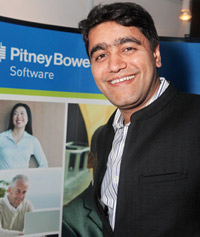
We have a structured way of analysing people that includes personality and technical tests and various rounds of interview. We never go by democratic way of selection i.e., seven saying ‘yes’ and three saying ‘no’, as the latter could have observed something that others failed to notice.

Q. Tell us about the challenges you have experienced in India.
A. On people’s front, it is retention and growing talent. We understand that the best we have is also the best for our competitors. It is about retaining talent by ensuring that employees do not lose faith in the organisation. Re-evaluating practices, for instance, what was done last year might not be the reasons to gain success this year. Growing a business is a challenge in itself, as it is about innovation, reinventing, and how fast one can adapt.

Q. The company was recently recognised as a top employer amongst the top 20 software companies in India (as per a survey conducted by DataQuest). What are the people practices behind this achievement?
A. We have a strong mentorship and coaching programme that is implemented in the best possible manner. We have identified the core talent of the organisation, irrespective of age, experience and the company they had worked with. This is where a young guy can mentor a senior director and a senior director can mentor a middle manager. We believe in practices such as performance management, learning and development, exit interviews, and even reaching out to people who have left the company to welcome them back. Click here to read full interview...

Read More IIPM Related Articles
Zee Business Best B-School Survey 2012
Prof. Arindam Chaudhuri's Session at IMA Indore
IIPM IN FINANCIAL TIMES, UK. FEATURE OF THE WEEK
IIPM strong hold on Placement : 10000 Students Placed in last 5 year
IIPM's Management Consulting Arm-Planman Consulting
Professor Arindam Chaudhuri - A Man For The Society....
IIPM: Indian Institute of Planning and Management
IIPM makes business education truly global
Management Guru Arindam Chaudhuri
Rajita Chaudhuri-The New Age Woman
IIPM B-School Facebook Page
IIPM Global Exposure
IIPM Best B School India
IIPM B-School Detail
IIPM Links
IIPM : The B-School with a Human Face

Tuesday, May 05, 2009

The Flip Side...


IIPM - Admission Procedure

But every success story has its dark side. And the side effects of Chandra’s super hit low cost formula has spawned a human resource problem. Let’s go back a few years. In 2005, Zee TV bounced back with fresh programming giving a serious threat to Star Plus’ supremacy in the category. In fact, Zee actually outshone Star Plus in TRPs in the prime time band for a few weeks. But they couldn’t sustain the lead for long and Star Plus soon reclaimed its position. So what actually happened? The low cost employee strategy backfired! The key people in their creative team and programming, which were working on major shows at that time, moved on because they got better offer (read: fatter pay packages). Vivek Bahl the then Creative Head of Zee TV moved to Star Plus and Ashwini Yardi the then Programming Head of the channel joined Viacom18’s Colors. As the big man himself admits, “Last year when all these fresh news and entertainment channels were launched many of our people were offered and taken at three to four times more salary than they got here.”

And it’s not just money! “The negative of being a family run business is that objective decision making is not always there,” feels Publicis’ Gupta, believing that the group has suffered because of this. Take the example of ICL: Sources confirm that ICL was conceived in 2005 itself, but the bureaucratic procedures delayed its launch by two years. “Imagine if ICL was launched in 2005 it would have divided the international cricket in two factions, taking the entire world by storm,” exclaims a source familiar with the development.

Clearly, like a few other family run businesses, Essel Group lags when it comes to giving freedom (especially financial) to its senior management. This probably is one of the reasons why key senior guys at Zee have not stuck around for long. Chandra himself admits that there have been some such conflicts in the recent past, especially when some in the senior management felt that Zee should spend like others are spending. But Chandra remained adamant. “That’s why there were some exits in senior management last year,” he adds grimly, perhaps hinting towards the exit of Pradeep Guha (the ex-CEO of ZEEL, who was used to the high cost spending style at his previous job in Times Group). Rajendra Sinh, Corporate Director HR, Essel Group, candidly observes, “Non performing assets even at senior level are not accepted. There have been some wrong hirings in past and that’s why the high churn rate at Zee!!”

At a time when high-flying consultants are paid millions of dollars simply to reiterate the important role of human talent in any organisation’s success, this candour toward its people resource may be the biggest chink in Chandra’s shining armour. At a time when the entertainment sector is witnessing unprecedented new-entrants, and when innovative programming is the key to retain eyeballs, Chandra is losing many of his best creative people. But the simultaneous economic slowdown and the resulting ad revenue slump that its most likely to serve up is certain to make Chandra’s low-cost mantra win yet again. Game, set and match... Now, that’s what we call a real SURVIVOR’S DESTINY!!

For more articles, Click on IIPM Article.

Source : IIPM Editorial, 2009

An Initiative of IIPM, Malay Chaudhuri and Arindam chaudhuri (Renowned Management Guru and Economist).

For More IIPM Info, Visit below mentioned IIPM articles.
1500-plus IIPM students placed across the country with 44 bagging international offers
IIPM set to beat economic slowdown
IIPM Admission Detail
IIPM Programme :- SUPERIOR COURSE CONTENTS
IIPM INTERNATIONAL - NEW DELHI, GURGAON & NOIDA

Friday, October 24, 2008

What makes Bhiwani so different from other districts of India, indeed other districts of Haryana for that matter?

As Vijender’s semi-final match ends in a narrow defeat, Jagdish Singh, solemn but satisfied, emerges from his prayer room. Almost a legend in Bhiwani, the man, fed up with overcrowding and hidebound rules inVijender SAI hostel, mortgaged his house and other property, took loans from well wishers and friends and started this club in 2002, where he dispenses free coaching. As the medals and accolades rolled in, his colleagues and superiors at SAI, did the most predictable thing, they initiated a departmental inquiry against him on the charges that he takes money for his coaching. Still fighting the enquiry, Coach Jagdish Singh, gets a reprieve when the news comes in that he has conferred the Dronacharya award. The reprieve is that in more ways than one, as the award carries a cash prize of 25 Lakhs. “I will use this money to pay back my loans, the rest I will invest in this club and maybe get my motorcycle repaired,” he says as an afterthought. Famous for not taking any breaks, the club is open seven days a week. Singh gets right down to business as the evening rolls in and with it come some 100 kids with stars in their eyes and dreams in their hearts. “I say, give us money and hold us accountable if we fail to produce more medals in 2012,” he says, with the supreme confidence of a man who’s been vindicated. I could be wrong, but maybe he’s the difference between Bhiwani and the rest of India.....Continue

Source : IIPM Editorial, 2008

An Initiative of IIPM, Malay Chaudhuri and Arindam chaudhuri (Renowned Management Guru and Economist).


Read also :-

Tuesday, October 21, 2008

The Dark Knight!

Of all the July 4ths that Bennett hates, he’ll hate July 4, 2008, the most. While the nation rejoiced on this day, he had already been sentenced to 16 years in Federal prison the day before... all thanks to his Dark Knight acts at Refco


“I knew failing to disclose these filings was wrong. I know I was wrong. I deeply regret it,” is how Phillip R. Bennett pleaded guilty, with eyes full of tears, before the US District Judge Naomi The Dark Knight!Reice Buchwald, on February 15, 2008. And what was his crime? Well he literally killed a company!!! Bennett, the former CEO of Refco Inc., a New York-based leading financial services company, earned fame having made millions for thousands of his clients (even US Senator Hillary Clinton was one!). But there was the dark side to this knight... he mismanaged Refco’s clients’ equity and disguised $430 million of bad debts. During its heydays, Refco was known as the largest non-bank US futures commission merchant of commodities and futures. The company was founded in 1969 by Lt. Thomas Dittmer and his stepfather Ray Freidman (who also had a criminal record!) as ‘Ray Freidman & Co.’ in Chicago. It was eventually relocated to New York. Its base had swelled to 200,000 customers and $4 billion in assets by October 2005. Then doomsday occurred. Many experts claim that Refco’s flameout was one of the most spectacular financial failures in US history amid civil and criminal investigations. Between its IPO in August 2005 and its October 18, 2005 bankruptcy filing, more than $1 billion in investor capital evaporated from Refco’s coffers. Beat this, it took just four days for Refco to transform from being the world’s largest commodities and futures brokerage to a company worth nothing, making it the fastest crash of a publicly listed company ever!...Continue

Source : IIPM Editorial, 2008
An Initiative of IIPM, Malay Chaudhuri and Arindam chaudhuri (Renowned Management Guru and Economist).

Read also :-

Saturday, October 11, 2008

Rockers & shockers!

Imagine selling rock guitars when classical music comes into vogue! Surely, a difficult external environment can overwhelm the best of them. B&E profiles three key sectors that merit a mention for profitable or not-so-profitable reasons. psus, of course have been included for their prominence in the list

Sub-prime?: Who is he?
Despite global slowdown, interest rate uncertainties & mounting inflation, Indian banks have a great opportunity to move ahead. But consolidation is also looming on the horizon, says gyanendra kashyap

The paradigm shift in the dynamics of the banking industry is overwhelming; thanks to the continued strong economic cycle. A total of 23 banks made it to the B&E Power 100 list this year. This shows that we are either quite immune from the sub-prime crisis or the impact is yet to come.

Bankex, which trailed around the 3,000 mark a couple of years ago, crossed the 12,000 mark on January 14, 2008. Once dominated by public sector entities, the industry is witnessing unprecedented changes and shareholders are having the last laugh (even though 19 of the 23 are PSBs); and why not, for Indian banking has topped the charts in value creation in FY ’08 (Boston Consulting Group’s report entitled “Managing Shareholder Value in Turbulent Times”). What is more interesting is the sharp decline in NPAs (from 8% in 2000 to about 1% today). Private players as well as their foreign counterparts are making deep inroads into the highly untapped markets; on the backdrop of an efficient technological set up and customer service; and slowly and steadily increasing their market share. Estimates suggest that the duo have been adding 1% of market share on an annualised basis. Their growth in terms of market share (by total assets) has been phenomenal; in 2003, market share of private banks was 17.5% and of foreign banks was 6.9%; by the end of 2007, the private sector banks commanded 21.5% of the market share, while their foreign counterparts increased their share to 8% (Moody’s report). ICICI, HDFC and AXIS are challenging the PSBs both in terms of quality and profitability; nevertheless the banking major State Bank of India (SBI) still tops the charts as far as profitability is concerned. Market capitalisation of ICICI bank (on June 24, 2008) was at $18.01 billion (as compared to SBI’s mcap of $17.71 billion); ample reasons to suggest why Brand Finance Plc. has rated the brand value & mcap of ICICI as ‘very strong’; HDFC bank has been rated strong on the same parameters. Going by the current rate of growth and promises that the new players show (AXIS, HDFC & ICICI banks have respectively registered 62%, 39% & 34% surge in profitability), the day may not be too far when more of them occupy the coveted B&E Power 100 ranks....Continue

Source : IIPM Editorial, 2008
An Initiative of IIPM, Malay Chaudhuri and Arindam chaudhuri (Renowned Management Guru and Economist).

Read also :-

Saturday, September 20, 2008

A woman on top

She is one of those rare women executives, who have thrived in a man’s world. And she has helped HDFC perform better.
Last week, as Renu Sud Karnad, Executive Director, HDFC, winged her way to yet another visit to the US, she had already taken a decision that thrilled the hearts of individuals who had taken retail loans from the corporation. Despite the fact that the Reserve Bank of India refused to lower the prime lending interest rates, Karnad had announced that HDFC would lower its home loan rates. Her’s was one of the first financial institutions to do so in recent times, when home loan rates had zoomed and lenders had been saddled with huge EMIs or increasing repayment periods.

In fact, Karnad, in her personal capacity, feels that interest rates have already peaked, and there are no macro reasons for another hike. But she was unwilling to say it on record. Instead, she said that RBI’s Governor has the unenviable task of balancing growth and inflationary pressures. “RBI Governor Y. V. Reddy is doing a great job, and has managed to achieve the objectives that any central bank would wish to. India is on a sustained growth path, and inflation seems to be under control,” she explains.

In the past year or so, Reddy has been worried about the unusual rise in asset prices across categories, he has felt that there is a bubble building up in sectors like real estate, and has tried his best to control the increase in prices without sacrificing on the growth front. For example, he has tightened the norms for real estate and home loans, thereby creating a sort of a slowdown at least in the small towns. But, at the same time, he doesn’t want investments to slow down considerably in the housing or real estate sector.

It is in this regard that Karnad’s move should be appreciated. If banks and institutions like HDFC can still lower interest rates, it will still spur demand despite the tight monetary policies of the RBI. It will create a win-win situation that will help the retail consumers as well as the policy makers. It will also turn out to be a relief for individuals, who have been saddled with huge outgo as home loans rates have steadily climbed from less than 8% to over 11% in the past couple of years.

Over the past many years, such decisions have defined the achievements of Karnad, who has maintained HDFC’s Numero Uno position in the housing sector. But it has not been an easy climb to the top of the corporate ladder. Especially for a woman, who has fought it out in a hitherto man’s world of Indian financial and banking services. “I was just lucky. I joined HDFC at the right time. So, it was slightly easy for me to reach the top. May be, the women who have joined in recent times, or my daughter if she joins the corporate world in the near future, won’t find it so easy,” explains Karnad.

What she means is that when she joined HDFC nearly three decades ago, the state-owned entity was on a growth path. So, anyone who joined at that time inevitably grew with the company. It was like joining a startup. Since you were one of the first to join, you participated in the successes – right from getting employee stock options, whose value jumped after the initial public offering, to grabbing a designation as you were one of the few who understood the philosophy and the strategy of the company.

eling in the corporate circles that women are better workers than their male counterparts. A senior woman executive contends that women tend to work harder as they have to prove that they can be as good, if not better, than men. So, HDFC sources explain how Karnad spent more hours in the office. In her early days, there were no fax machines, laptops and Blackberry mobiles, so one had no option but to be in office to receive communication on the telex machine.

In the same vein, women are known to be great multi-taskers. Unlike most men, who think and act sequentially, who complete one task at a time, women can tackle 4-5 issues at the same time. One of the reasons may be that women do it all the time at home – look after kids, listen to their in-laws, interact with their husbands – all at the same time. Therefore, they are adept at solving 4-5 problems at the same time. In financial services, where everything has become globalised, and where problems crop up at regular intervals, the art of multi-tasking turns out to be an advantage for women executives.

For Complete IIPM Article, Click on IIPM Article

Source :
IIPM Editorial, 2008
An IIPM and Professor Arindam Chaudhuri (Renowned Management Guru and Economist) Initiative

Read these article :-
ZEE BUSINESS BEST B SCHOOL SURVEY
B-schooled in India, Placed Abroad (Print Version)
IIPM in Financial times (Print Version)
IIPM makes business education truly global (Print Version)
The Indian Institute of Planning and Management (IIPM)
IIPM Campus

Top Articles on IIPM:-
'This is one of Big B's best performances'
IIPM to come up at Rajarhat
IIPM awards four Bengali novelists
IIPM makes business education truly global-Education-The Times of ...
The Hindu : Education Plus : Honour for IIPM
IIPM ranked No.1 B-School in India, Management News - By ...
IIPM Ranked No1 B-School in India
Moneycontrol >> News >> Press- News >> IIPM ranked No1 B-School in ...
IIPM ranked No. 1 B-school in India- Zee Business Survey ...
IIPM ranked No1 B-School in India :: Education, Careers ...
The Hindu Business Line : IIPM placements hit a high of over 2000 jobs
Deccan Herald - IIPM ranked as top B-School in India
India eNews - IIPM Ranked No1 B-School in India
IIPM Delhi - Indian Institute of Planning and Management New Delhi ...domain-b.com : IIPM ranked ahead of IIMs

Tuesday, September 02, 2008

High-end diesel technology

Now, the world’s cheapest car moves into the third gear. With access to high-end diesel technology, and several options to locate its ‘cheap car’ factory (or assembly units), the Tatas seem to have got their back-end in place. Simultaneously, they had to look at the front-end; after all, Tata Motors wanted to sell the Rs.1 lakh car in as many markets as possible. It was meant to be a global car for global consumers. It is in this context that the Jaguar-Land Rover deal will immediately help it to tap the European market.

The Jaguar-Land Rover buyout becomes critical as the Tatas have failed to make a mark in foreign markets in the past. Prominent signage on the Team Jordan’s Formula 1 car preceded Tata’s exports of Indica to the UK; the car was marketed under the City Rover brand name. Even though the car did not do too well, it did give Tata Motors a foothold in Europe. Today, the company has agreements in various European nations to assemble the Tata Safari SUV, among other products. Sponsoring Narain Kartekeyan, India’s first F1 driver, was also a step to establish the Tata brand in Europe.

As you have probably realised, the Rs.1 lakh car has moved into fourth gear, and you are cruising at 60 kms an hour. But just drive along, as the puzzle is still not complete. The last few pieces have to still fall into place. Only then will you be able to figure out the real design behind the several decisions taken by Ratan Tata to turn his ‘small car’ dream into reality.

Despite being loss-making (see box), Jaguar and Land Rover are perceived as exclusive and high-end European brands. Even if Tata Motors gives full management autonomy to the acquired businesses, and sells their products the same way as Japan’s Toyota does with Lexus (without lending its name to reduce any form of brand dilution), it will still earn brownie points. The two European brands will help establish Brand Tata, at least in Europe. They will additionally help the Indian car maker to combat any moves by China to manufacture its own version of the world’s cheapest car.

“Tata Motors has a better image then the Chinese as it has a history of manufacturing, and has already acquired brands like Tetley and Corus,” says Autocar India’s Ashish Masih. It’s time to move into fifth gear. Tata Motors now has the technology, low-cost manufacturing options, access to developed markets, and a globally-recognised brand name. It is all set to launch the Rs.1 lakh car, which will be unveiled at the Auto Expo. Every cog in the design-manufacturing-marketing-branding wheel is in place.

So, while the world’s cheapest car is breaching the 80 kms an hour mark, it’s time to take a ride in another vehicle, the Tata Motors’ SUV. For years, Tata wanted to do an Indica with his range of SUVs. But Tata Sumo and Tata Safari have never been perceived as low-cost, entry-level, but stylish vehicles. Another Indian competitor, M&M, has done wonders with its Scorpio. Foreign players like Toyota too have fared much better. In the high-priced SUV segment, Tata hasn’t been able to make any inroads.

Land Rover will be a coveted catch for Tata as the brand represents one of the most-sought after SUV. The recently launched Range Rover and the updated Disco models have done well and can provide Tata with a platform to ride the international markets. Tata Motors may sell its products along with Land Rover’s, thereby amplifying both the visibility and reach of the indigenous SUVs. Before you think that it is not worthwhile to associate with a loss-making brand, listen to Ford UK’s John Gardner.

“The Jaguar-Land Rover business has been a profitable one in recent times; 2007 has been best ever year for Land Rover, better than 2005 and 2006.” This implies that Land Rover can effectively be used as a brand extension. Masih agrees, “Tata Motors will get access to better technology from Land Rover that can help the former to reposition its SUVs in higher segments.”

For Complete IIPM Article, Click on IIPM Article

Source :
IIPM Editorial, 2008
An IIPM and Professor Arindam Chaudhuri (Renowned Management Guru and Economist) Initiative

Read these article :-
ZEE BUSINESS BEST B SCHOOL SURVEY
B-schooled in India, Placed Abroad (Print Version)
IIPM in Financial times (Print Version)
IIPM makes business education truly global (Print Version)
The Indian Institute of Planning and Management (IIPM)
IIPM Campus

Top Articles on IIPM:-
IIPM to come up at Rajarhat
IIPM awards four Bengali novelists
IIPM makes business education truly global-Education-The Times of ...
The Hindu : Education Plus : Honour for IIPM
IIPM ranked No.1 B-School in India, Management News - By ...
IIPM Ranked No1 B-School in India
Moneycontrol >> News >> Press- News >> IIPM ranked No1 B-School in ...
IIPM ranked No. 1 B-school in India- Zee Business Survey ...
IIPM ranked No1 B-School in India :: Education, Careers ...
The Hindu Business Line : IIPM placements hit a high of over 2000 jobs
Deccan Herald - IIPM ranked as top B-School in India
India eNews - IIPM Ranked No1 B-School in India
IIPM Delhi - Indian Institute of Planning and Management New Delhi ...domain-b.com : IIPM ranked ahead of IIMs

Monday, August 25, 2008

A Finnish bard

Nokia’s move into music is logical

What comes to your mind when you talk about the $159.9 billion Finnish giant Nokia? Obviously handsets, right? Yes, and that its ride in this regard of late has been wonderful is undeniable (with a global market share of 32.6% being proof). However, there is much beyond just handsets that this Finnish giant is in for these days. Putting words to practice comes its latest revelation to move into unlimited music downloads to its subscribers in collaboration with Universal group, through a venture called ‘Comes with Music’ announced on December 2, 2007. So is this move well-toned with the changing scenario in the cellphone industry?

Certainly, as Jeff Kagan, a telecom expert notes, “The cell phone industry continues to go through enormous change and growth and the wireless phone is growing past a phone. The next several years will be full of these types of announcements.” Alternatively, with the venture (which will become operational in 2008) guaranteeing Nokia upto $5 billion in added revenues on an annual basis, the strategy appears logical as Mike Grant, Head, Broadband and Media, Analysys Inc. asserts, “With this announcement, Nokia has stepped out ahead of the rest in bridging the divide between mobility and the Internet. Should Nokia successfully execute these developments and attract even a small proportion of their current 1 billion customers to this service, other operators and OEMs will have a mountain to climb to offer the same compelling proposition.” Surely, Nokia is laying down the gauntlet and moving away from being a pure device play into an integrated end to end consumer service organisation in the mould of Apple, or perhaps even bigger and better than Apple in the business as Grant asserts, “Nokia’s global market reach and scale make it a powerful competitor to all in this space, while Apple has a strong presence only in the US.”

Surely, Nokia’s has expertly diversified its revenue streams during the past couple of years. Its focus on software as its core strategy, unlike other phone manufacturers will enable it to ride into sectors that are inherently software focused, such as mobile web services and other services including music et al. And this radical strategic move automatically pushes Nokia up the value chain. With revenues for Q4 2007 estimated to touch $21,123.4 billion, representing a rise of 63.77% over Q3 2007 this move is all but a clear case of successful bundling; all to please its consumers. Enough reasons why it should be the market leader in this regard.

For Complete IIPM Article, Click on IIPM Article

Source :
IIPM Editorial, 2008
An IIPM and Professor Arindam Chaudhuri (Renowned Management Guru and Economist) Initiative

Read these article :-
ZEE BUSINESS BEST B SCHOOL SURVEY
B-schooled in India, Placed Abroad (Print Version)
IIPM in Financial times (Print Version)
IIPM makes business education truly global (Print Version)
The Indian Institute of Planning and Management (IIPM)
IIPM Campus

Top Articles on IIPM:-
IIPM makes business education truly global-Education-The Times of ...
The Hindu : Education Plus : Honour for IIPM
IIPM ranked No.1 B-School in India, Management News - By ...
IIPM Ranked No1 B-School in India
Moneycontrol >> News >> Press- News >> IIPM ranked No1 B-School in ...
IIPM ranked No. 1 B-school in India- Zee Business Survey ...
IIPM ranked No1 B-School in India :: Education, Careers ...
The Hindu Business Line : IIPM placements hit a high of over 2000 jobs
Deccan Herald - IIPM ranked as top B-School in India
India eNews - IIPM Ranked No1 B-School in India
IIPM Delhi - Indian Institute of Planning and Management New Delhi ...
domain-b.com : IIPM ranked ahead of IIMs


Wednesday, August 20, 2008

Deviating from the derivatives path!

New products will help minimise export of our capital market
Getting driven towards the complex or deviating your path from derivatives. Of course not, after SEBI’s decision to introduce seven new products in the stock market.

“Rather than allowing the trade to move offshore, they have allowed these products to be traded in India. If the trading environment is open, global investors would always prefer to trade derivatives in the home market and this psychological advantage is sought to be converted to a real one,” says Rajiv Shastri, Head – Business Development and Strategic Initiatives, Lotus India Mutual Fund.

Derivative market has experienced remarkable growth over the last five years. This new initiative will further open doors to various new opportunities. Select steps will bring much of the volume on Indian bourses, which are otherwise happening in offshore markets as of now. However Yogesh Radke, Derivative Analyst, Edelweiss Capital, feels that, “it will take a long time before all products get launched into the market. Few products like ‘Long Duration Options’ & ‘Mini Contracts’ are expected to get introduced by next 3-4 months.”

There was a void in the Indian market with respect to new products. But now??? Shastri believes, “If there was a void it would have been filled by offshore markets in the absence of any developments domestically. Having chosen to act, SEBI has laid the foundation for retaining the ownership of the market.” Exciting, bright, a long way to go... – are few adjectives, which resonates, describing the future of the derivatives market in the time to come in India.

For Complete IIPM Article, Click on IIPM Article

Source :
IIPM Editorial, 2008
An IIPM and Professor Arindam Chaudhuri (Renowned Management Guru and Economist) Initiative

Read these article :-
ZEE BUSINESS BEST B SCHOOL SURVEY
B-schooled in India, Placed Abroad (Print Version)
IIPM in Financial times (Print Version)
IIPM makes business education truly global (Print Version)
The Indian Institute of Planning and Management (IIPM)
IIPM Campus

Top Articles on IIPM:-
IIPM makes business education truly global-Education-The Times of ...
The Hindu : Education Plus : Honour for IIPM
IIPM ranked No.1 B-School in India, Management News - By ...
IIPM Ranked No1 B-School in India
Moneycontrol >> News >> Press- News >> IIPM ranked No1 B-School in ...
IIPM ranked No. 1 B-school in India- Zee Business Survey ...
IIPM ranked No1 B-School in India :: Education, Careers ...
The Hindu Business Line : IIPM placements hit a high of over 2000 jobs
Deccan Herald - IIPM ranked as top B-School in India
India eNews - IIPM Ranked No1 B-School in India
IIPM Delhi - Indian Institute of Planning and Management New Delhi ...
domain-b.com : IIPM ranked ahead of IIMs

Wednesday, August 13, 2008

Head-mounted display with two stereoscopic screens

Most of today’s VR systems consist of a head-mounted display with two stereoscopic screens positioned just a few inches in front of the eyes. Movement in cyberspace is simulated by shifting the optics in the field of vision in direct response to movement of certain body parts, such as the head or hands. Turn the head, and the scene shifts accordingly. The sensation is like being inside an artificial world the computer has created. As the user moves his head to look around, the images shift to create an illusion of movement. The user moves while the virtual world is standing still. The glasses also sense the user’s facial expressions through embedded sensors, and that information can control the virtual version of the user’s body. Most current VR systems provide only visual experiences created by computer-assisted design or other graphics/animation systems, but researchers are working on interface devices that add sound and touch. Experts agree that MMORPGs are our current epitome of VR. Various technologies (communications, AI, computing, interface) will affect us, and together these will shape society in the future. Eventually, VR may be delivered through direct computer-to-brain connections. This means that you could probably “jack-in” to a virtual world using a mechanism that connects the world with your brain. Sounds familiar? Yeah, that’s what the characters in the movie Matrix did all the time.

Remember Morpheus’ spine-chilling question – “What is real? If it is what you see and feel and smell, then real is nothing but electrical impulses analyzed by the brain.” If it were possible to connect your brain to the virtual 3D world, you could very well close your eyes and live a virtual life with all your senses intact. That’s what they do in the movie; but obviously, we are not ready with the cranium plungers yet. Such technology is still years away. We need economically feasible hardware, not to forget VR software so advanced, that it blurs the line between reality & virtual reality. But we’ll be there sooner than you think. Check out some software experiments showing promise.

Photosynth (http://labs.live.com/photosynth) from Microsoft Live Labs is a 3D image re-constructor that rebuilds entire environments based on hundreds of photos taken from different angles. The result is a web based photo browser that stitches photos into a seamless panorama in a true 3D environment. So, if you took enough pictures on your last trip to the Swiss Alps, go ahead and recreate a virtual 3D version of the snow-filled locales on your desktop.

For Complete IIPM Article, Click on IIPM Article

Source :
IIPM Editorial, 2008
An IIPM and Professor Arindam Chaudhuri (Renowned Management Guru and Economist) Initiative

Read these article :-
ZEE BUSINESS BEST B SCHOOL SURVEY
B-schooled in India, Placed Abroad (Print Version)
IIPM in Financial times (Print Version)
IIPM makes business education truly global (Print Version)
The Indian Institute of Planning and Management (IIPM)
IIPM Campus

Top Articles on IIPM:-
IIPM makes business education truly global-Education-The Times of ...
The Hindu : Education Plus : Honour for IIPM
IIPM ranked No.1 B-School in India, Management News - By ...
IIPM Ranked No1 B-School in India
Moneycontrol >> News >> Press- News >> IIPM ranked No1 B-School in ...
IIPM ranked No. 1 B-school in India- Zee Business Survey ...
IIPM ranked No1 B-School in India :: Education, Careers ...
The Hindu Business Line : IIPM placements hit a high of over 2000 jobs
Deccan Herald - IIPM ranked as top B-School in India
India eNews - IIPM Ranked No1 B-School in India
IIPM Delhi - Indian Institute of Planning and Management New Delhi ...
domain-b.com : IIPM ranked ahead of IIMs

Monday, August 11, 2008

Motion Picture

Amit Khanna, Chairman, Reliance Entertainment, says, “Reliance Entertainment has a dominant position in India but, when it comes to motion pictures, it has been obvious that we extend our footprint to Hollywood. We’ve devised a unique method of investing, whereby Reliance Big Picture can help advance the goals of several important creators in the global industry and expect such deals in the near future too.”

But what is it that the Indian movie mavericks will bring to Hollywood? Industry experts believe that production houses like Big Motion Pictures, UTV, Percept Pictures, et al, can bring a lot of differentiation to Hollywood in terms of content. They will bring Asian perspective in American movies, which can make them more appealing. More importantly, they will bring a lot of cost benefits to Hollywood, which is very much needed at this point of time, when the US economy is going through a lean period. However, one question that is troubling the experts is: will these Indian production houses be successful in their Hollywood stint? “It’s better for them (Indian production houses) to start with co-productions and that’s exactly what they are doing,” says a media analyst. Tying-up with Hollywood studios like George Clooney’s Smokehouse Productions, Tom Hanks’ Playtone Productions, Brad Pitt’s Plan B Entertainment, Chris Columbus’ 1492 Pictures, Nicolas Cage’s Saturn Productions, et al, will make them understand the market better. Whatever they do, the road to Hollywood will not be an easy one as Publicis’ Gupta feels, “America is very America-centric… The perceived notion of low quality for any product from a third world country may create some initial hurdles for them.” Be that as it may, the ‘big’ money lies overseas only. And if the corporate production houses need to compete with their global counterparts then the only way for them is to think local but act global!

For Complete IIPM Article, Click on IIPM Article

Source :
IIPM Editorial, 2008

An IIPM and Professor Arindam Chaudhuri (Renowned Management Guru and Economist) Initiative

Read these article :-
ZEE BUSINESS BEST B SCHOOL SURVEY
B-schooled in India, Placed Abroad (Print Version)
IIPM in Financial times (Print Version)
IIPM makes business education truly global (Print Version)
The Indian Institute of Planning and Management (IIPM)
IIPM Campus

Top Articles on IIPM:-
IIPM makes business education truly global-Education-The Times of ...
The Hindu : Education Plus : Honour for IIPM
IIPM ranked No.1 B-School in India, Management News - By ...
IIPM Ranked No1 B-School in India
Moneycontrol >> News >> Press- News >> IIPM ranked No1 B-School in ...
IIPM ranked No. 1 B-school in India- Zee Business Survey ...
IIPM ranked No1 B-School in India :: Education, Careers ...
The Hindu Business Line : IIPM placements hit a high of over 2000 jobs
Deccan Herald - IIPM ranked as top B-School in India
India eNews - IIPM Ranked No1 B-School in India
IIPM Delhi - Indian Institute of Planning and Management New Delhi ...
domain-b.com : IIPM ranked ahead of IIMs


Wednesday, August 06, 2008

Tech-savvy people

Given the scenario, a few intelligent ones like RPG Cellucom have latched on to an innovative business model to succeed in the mobile retail sweepstakes. In Feb. 2008, RPG Cellucom launched their own private labels for mobile accessories, willing to make additional profits through this route. Says Singh, “Our core target audiences are the tech-savvy people and we would continue to leverage through cross-selling and up-selling of our offerings.”

This strategy also makes more sense because gross margins in the cell-phone business are a meager 4-5%, whereas the upcoming accessories market boasts gross margin to the tune of 15-30%. Small wonder that even players like Subhiksha and mBazaar have begun evaluating the private label for accessories. But this strategy has its loopholes. Of the 100 people who buy cell phones, only about 10 look for accessories. With such low demand statistics, will having their own private labels fetch adequate returns on investment for these retailers? Brand analyst Harish Bijoor feels that private labels can be an option but that “Going forward, personlised solutions in terms of desired features would be the key to their success.”

Personlisation to the extend that customers should be able to choose whether they want a camera in their phone and if yes, then the kind of configuration that the camera would have. This would mean that handset manufacturers share some product specification functions with these organised retailers. But in the ‘mass models’ driven Indian handset industry is in presently, this is easier said than done.

For now, organised retailers are doing a fancy job of aggressive expansions, but in the long run they’d have to choose their own innovative route to add-value for consumers. And that perhaps would be the key to become the King of this Castle.

For Complete IIPM Article, Click on IIPM Article

Source :
IIPM Editorial, 2008

An IIPM and Professor Arindam Chaudhuri (Renowned Management Guru and Economist) Initiative

Read these article :-
ZEE BUSINESS BEST B SCHOOL SURVEY
B-schooled in India, Placed Abroad (Print Version)
IIPM in Financial times (Print Version)
IIPM makes business education truly global (Print Version)
The Indian Institute of Planning and Management (IIPM)
IIPM Campus

Tuesday, August 05, 2008

History of failed overseas acquisitions

However, the question still remains unanswered. “Why now?” “Currently the valuations demanded by the companies are on the higher side and are major deterrent to big deals. Besides, apart from M&As, companies are also on a lookout for brand acquisitions to enhance their presence in respective therapeutic segments,” reasons Nangra. Also, with concerns related to economic slowdown and a history of failed overseas acquisitions, Indian companies now seem to have realised that though it’s exciting to buy big companies abroad, the real synergies are hard to achieve. Moreover, the competition from small generic drug-makers has stiffened too forcing these big pharma companies to re-think their strategies. “Develop new business models… on the basis of strengths & revenues – this is the most important factor that will decide the competitiveness and sustainance of Indian companies in the future,” agrees Dr. R. B. Smarta, MD of Interlink, a pharma and healthcare consultancy. Even Sujay Shetty, Associate Director, Financial Advisory Services Pharma & LifeSciences, PwC shares the same view. “This will not only provide the required size and expertise to the domestic companies (so that they can compete globally) but will also certainly improve efficiency; provide economies of scale; and strengthen their product portfolio, eventually benefiting the industry as a whole.”

Thus, as international pharmaceutical companies increase their activity in India and globally and bring-in modes of killing, domestic companies will need to move up the product value chain. And in this context, targeting niches seem to be the next best move. Yes, but then it’s not that simple – it all depends on what you pick!

For Complete IIPM Article, Click on IIPM Article

Source :
IIPM Editorial, 2008
An IIPM and Professor Arindam Chaudhuri (Renowned Management Guru and Economist) Initiative

Monday, August 04, 2008

Sony Pictures Imageworks

But the bigger question to ponder is why these companies are resorting to setting up subsidiaries rather than outsourcing which would have been a cheaper option for these companies. Tim Sarnoff, President Sony Pictures Imageworks, reason, “This way we would have a better control over the output of the product. Also, our staff in Culver City (Los Angeles) and India can work on different parts of the same projects making use of the same kind of infrastructure…” There are also some other advantages that these companies would be looking at gaining. With the boom that has been there in the animation scenario, there is plenty of trained staff that would be working at almost less than half the price. Well, it would mean higher investments now, but the bigger studios would now be looking at churning out greater outputs. Hence, in the long run, they would be able to save greater costs.

In short, there would be many more companies who would be looking at following this trend in the coming years. Even various state governments have sensed great opportunity here and as a matter of fact, the Andhra Pradesh Government has announced that it is soon setting up a Hyderabad Digital Media City by acquiring about 200 acres of land in Sultanpur. There is no denying that given the digital infrastructure, talent pool and low production costs that India offers, it is a welcome sign for many International production houses to step up their shop here.

However, there are some roadblocks too that they might face, as they grow forward. Keeping in mind the pace of the industry, people like Jayakumar have already started worrying about the talent crunch. Also, there are other countries that offer great opportunities to the business and are also doing great animation work, including China, Philippines and other Eastern European countries. So, in the long run to able to sustain this industry, India would have to continue being cost effective and provide ample opportunities to welcome other international companies. There would also be a need to set up more animation training institutes by the government and corporates to ensure that at least manpower problems do not dampen the pace of this growth saga.

For Complete IIPM Article, Click on IIPM Article

Source :
IIPM Editorial, 2008

An IIPM and Professor Arindam Chaudhuri (Renowned Management Guru and Economist) Initiative

Read these article :-
ZEE BUSINESS BEST B SCHOOL SURVEY
B-schooled in India, Placed Abroad (Print Version)
IIPM in Financial times (Print Version)
IIPM makes business education truly global (Print Version)
The Indian Institute of Planning and Management (IIPM)
IIPM Campus